Wednesday, 14 September 2011

Wednesday, 14th of September 2011 - Gas Release mechanism

To continue on from the dismantlement of the lighters - a specifically designed mechanism was needed to allow the concept to be applied in a usable way. To make sure the product is easy to use it is not acceptable to simply use lighters in the design. Hence a gas release mechanism is needed to make sure this is possible:

Sketch: This mechanism will allow a lever to lift on a pivot point allowing as to be released from the valve. The valve will screw into the threaded section and attach to the lever which pivots off the center A-frame extrusion. The wedge mechanism to depress this lever will pivot off of the cylindrical extrusion (bottom-right of top view). This will allow for a simple "knock-on" - "knock-off" way of releasing the gas to create the ring of flames.

 This will be explored further through the use of computer aided design and simulations...

Tuesday, 13 September 2011

Tuesday, 13th of September 2011 - Flame and heat resistance

Because one of the primary components of the design is to feature flame and heat - we must consider the materials in which the product is manufactured (heat resistance/retardant).

It is more than likely that some form of transparent casing will be needed to protect from the open flames. A regular application of Soft Glass should be sufficient as it still takes reasonably high temperatures for it to soften or fuse. - Jim Lesko

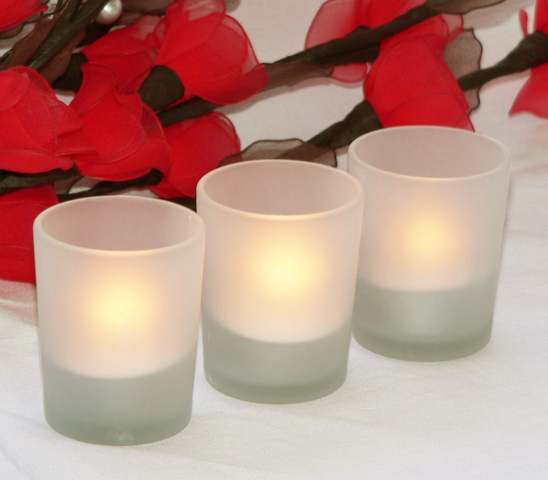
It was briefly suggested that we use smoked/frosted glass to create a glow sensation rather than a reflective sensation.


Images: Frosted glass to create a glow feel rather than enhanced reflections through regular glass
As for the rest of the body/form, it is more a debate of colour and texture..

Wednesday, 7 September 2011

Thursday, 7th of September 2011 - Dismantlement of the lighter

To try and figure out how we can use the lighters mechanism we decided to go out and buy a few and pull them apart...

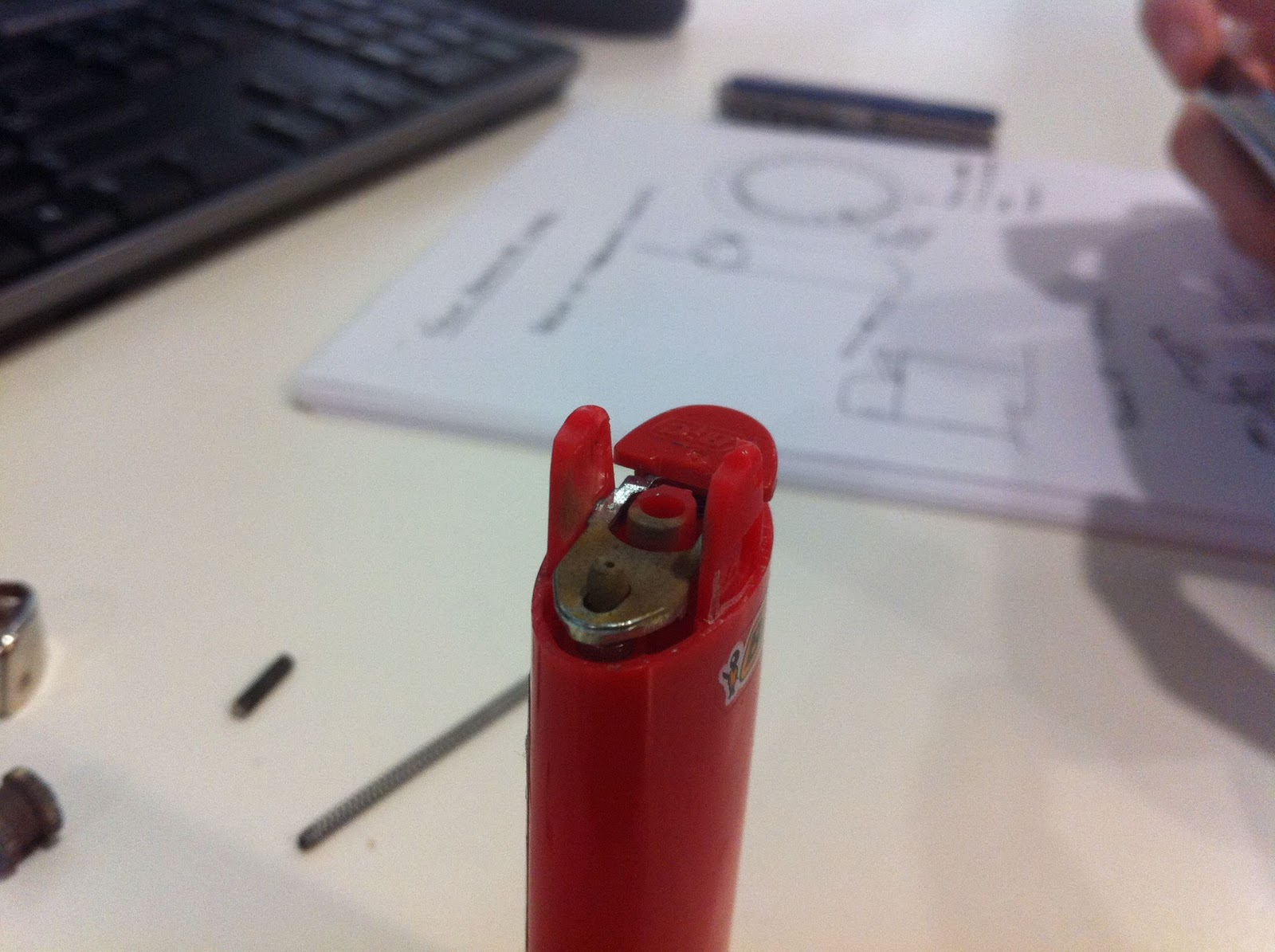
Image: Dismantlement of basic lighter components. Being only press fit in place the top components of the lighter were relatively easy to pry off with the help of a pocket knife. By taking these parts off, we were able to see how the simple action of roll and press was able to create an instant flame. The main component that we were trying to understand was the valve mechanism...

Image: This close up image shows the top of the valve opening as well as the leaver that activates the gas flow. By pressing down on the lever, internal valve line is lifted up to allow gas to pass through a now open channel. By then releasing the lever the opening is shut off and the gas is no longer allowed to flow through through. This valve has been designed so that the appropriate amount of gas is released to allow a flame that is just the right size for ignition aids to other sources.

Image: The top parts of the lighter which include the protection housing, flint, flint spark wheel, flint spring and wheel spring. This is basically the assembly that helps create the initial spark to allow flame to be produced from the gas flow coming past the red hot flint material created from a high amount of friction from the flint wheel. 
Image: This is an exploded view of how a lighter goes together. This lighter is of similar design to the above BIC lighter though this lighter has the ability to be adjusted a lot further than the BIC. The long white extrusion is a fibrous material that allows the butane gas to be absorbed and released in a controlled manner (filter). 
Image: This is the lever mechanism concept that can be incorporated into the product. There were a few problems which we found with this configuration however. As apposed to the BIC lighter, this cheaper version had most of the materials made out a a polymer that caught on fire - this meant that after leaving lit for more than approx. 1 or 2 minutes, these housings and lever started to heat up, become soft and even catch on fire in some cases. This made us realize the design would have to consider the possibilities of components melting due to flame/heat. 
Image: The KEY component - the gas release valve. This tiny valve is the key to how these lights work as well as the mechanism in which we wish to use in our ring of first concept. The outer which polymer housing holds a metal pipe which can be pulled up to allow gas to flow through some small holes at its base, which when dropped down are normally closed.

Image: The principal of how this concept can work - having turned around the gas release lever, we can begin to see how we can design a simple mechanism to allow the lever to be depressed and in turn release gas , creating flame. 

Image: Close up of the ring of fire.

Image: Ring of fire - the ring has been set up with a specific distance between the lighters of 15mm. This is a median distance that has been trialed to see how fare away a lighter can be before it catches on to the next. We have decided to use this concept as it will save having to install ignition sources (such as piezoelectrical) as each flame source. This way we can light off the previous flame, cutting down on the need for individual ignition while still maintaining the variable progression.

Image: Shows how the lever can be positioned the reverse what to still achieve gas release.

 By pulling apart the lighters and experimenting with gas flows and ignition distances, we were able to determine the rings size as well as come up with some configurations for the mechanism themselves. The below video shows how we are able to ignite the next flame off of the previous one...


Making sure that we have the correct distances between the lighters, we can start figuring out how many flames we can use as well as how big the product is going to be - and in particular how it will bit into our chosen scenario and user environment.

Tuesday, 6 September 2011

Wednesday, 6th of September - Ring of fire!

How can we create a variable flame output to project a number of users at the same time, that is constantly progressive in its function and output? The bobbing candle is an excellent concept in connecting two users working together and quite literally burning the candle at both ends - though it is somewhat restricted in its user input by only allowing two people to interact with it. Considering the context for people working on projects collaboratively, it would do well to have the ability for more than 2 or 3 members of the collaborative team to have the power to achieve both input and output in the one device.

A simple geometric is needed to represent a variable amount of people, possibly through representing a percentage of the teams inputs. -

Move from bobbing candle to ring of fire
By using a ring of fire that utilizes approximately 20 flames, there is a lot more flexibility in how many people are able to collaborate at the same time. Also to make sure an even spread of distribution during operation, applying the flames as a percentage to represent the team members involved will mean all the flames are utilized regardless of how many people are collaborating. A ring also allows the for the minimum amount area used to how many flames can be produced.

In a normal situation, the principal of using the ring off a gas stove would suffice, although this application requires the individual ignition of each flame. For this reason it was decided the use of gas as an ignition source for the flames would be the best option. With the using gas with a combination of the requirement of needing each flame to be individually lit, each flame will need to be controlled using some kind of valve mechanism.

Simple electric solenoid actuator valve
Individual solenoid valves would work well, allowing us to control each gas line individually through the use of the Arduino circuit boards. Unfortunately due to the cost and size of solenoid valves, they have deemed to be an unsuitable to attempt to control each flame in a progressive state. The next best option was to look at mechanical valve options...

Section: Cigarette lighter gas release mechanism
The conventional cigarette lighter uses such a mechanism to release gas past a sparking flint to create instant flame/heat. The use of a similar mechanism to control the individual flames in the product would suit the application.

{Add sketch of how a cigarette light would fit inside the base}

Using this mechanism would cut costs substantially while allowing for a higher level of mechanical design freedom. However, would we be able to stretch the concept so far as to actually use the lighters as the gas supply as well???

The problem with this is that the gas supply/lighters and mechanism becomes a consumable object which needs replacing... How do we keep the mechanism but throw away the individual gas supply and stick with a universal supply????


Monday, 5 September 2011

Monday, 5th of September 2011 -

The link below will take you to the initial concept video presentation in which the group is choosing to explore:
http://dnb601-senseandsensuality.blogspot.com/2011/08/week-5-concept-presentation-burning.html
From exploring different pathways with the tutors, it seemed we should be looking at some different concepts - one of the key aspects of the design that we wanted to stick with however was the flame/candle side of the idea.
This concept of using a candle/flame was a crucial feedback medium in the context of the design. One of the main ideas in the design (and many other designs focusing towards intelligent interaction design) is the force of presence in the feedback/output side of the interaction. Controlled flame and in particular candles, bring warmth to the space, allowing most people to feel comfortable in their environment.

However, it is important that in the utilisation of the flame that we enhance the scenario in which the product is placed rather than deter the user from their current activity. This is due to the scenario/context of having multiple users contributing to a singular activity or project.. 


From here the group has explored various ways of moving away from the bobbing motion of the candle (that can be seen in the initial concept video). Another reason from moving away from this type of feedback is it not only distracts the users from their activities but restricts the number of people that can contribute to the activity... How can we keep the medium of flame and apply it so >3 people can participate in the same activity, with a progressive output?

Wednesday, 31 August 2011

Wednesday, 31st of August 2011 - Burning the candle at both ends (will it be a distraction)

  1. 3
    Go into the room your studying and take out all things that distract you.
  2. 4
    Light candles or spray something to help make you relaxed while studying this will help you be less forgetful.
  3. 5
    Once you are relaxed, organize everything you need to study and lay it out in order from hardest to easiest that way you do the harder ones first so if you get tired you'll know them already.
  4. http://www.wikihow.com/Avoid-Distractions-While-Studying
 It may actually be benificial to have the candles present in the room to keep a relaxing environment for people that are involved in the group study - it can deffinately be seen as a motivator to keep going even if it just so you know/sense someone is with you helping you do your study.

For each situation that has been mentioned, a bobbing candle may well be benificial if the right variables are controlled - ie. speed of the bobbing, intensity of the flame and light/ intensity of the heat.

Tuesday, 30 August 2011

Tuesday, 30th of August 2011

"Burning the candle at both ends..." is the name of the concept that was chosen today by the group to further explore. The loose definition is as follows:
burn the candle at both ends Fig. to work very hard and stay up very late at night. (One end of the candle is work done in the daylight, and the other end is work done at night.) No wonder Mary is ill. She has been burning the candle at both ends for a long time. You'll wear out if you keep burning the candle at both ends. 
OR
burn the candle at both ends to get little sleep or rest because you are busy until late every night and you get up early every morning (usually in continuous tenses) She'd been burning the candle at both ends studying for her exams and made herself ill.

Basically referring to working too hard at a particular activity. However, other areas can be explored - 

  • Work/study - Can we use the concept to motivate or inspire each other to keep working late in the night by literally burning the candle at both ends... Will it affect the study or working as a possible distraction or something to send someone to sleep?
  • Romantic setting - How will the couples react with something bobbing up and down in front of them? How can it stimulate the senses - Aromas? Level of light?
  • Competitive - Can it be seen as a timer? How long has the other been racing etc. A varied intensity and speed can tell who is winning. Are there other variables? 
  • Music rehersal - The bobbing candle could adhere to being useful in musical practice - particularly with music having such a dependence on  tempo and timing. Is there also a way of having the candle applied for tuning purposes? - evening out when the right note is played or when the right notes are played. A simple input is the music being played but with the output at the other end..? Evens out with harmony?
  • Artists and writers - Co-authors may need to ability to easily know the progress of another writer - input may have to come from either "time spent" or a computer plug in for word processing. For artists it would be as simple as whether a piece has been created dependant on the artwork type.
  • Insomnia and sleeping issues - Due to the candles relaxation properties it could be used to help with various sleeping problems such as insomnia. Inputs would be - noise monitoring - movement (micro & macro) - breathing patterns. The output at the other end would reflect the sleeping pattern of another person - erratic or slow and relaxed. May be able to calm each other down if they know someone else is sleeping calmly.